TM SIM Registration vs SIM Expiry Guide
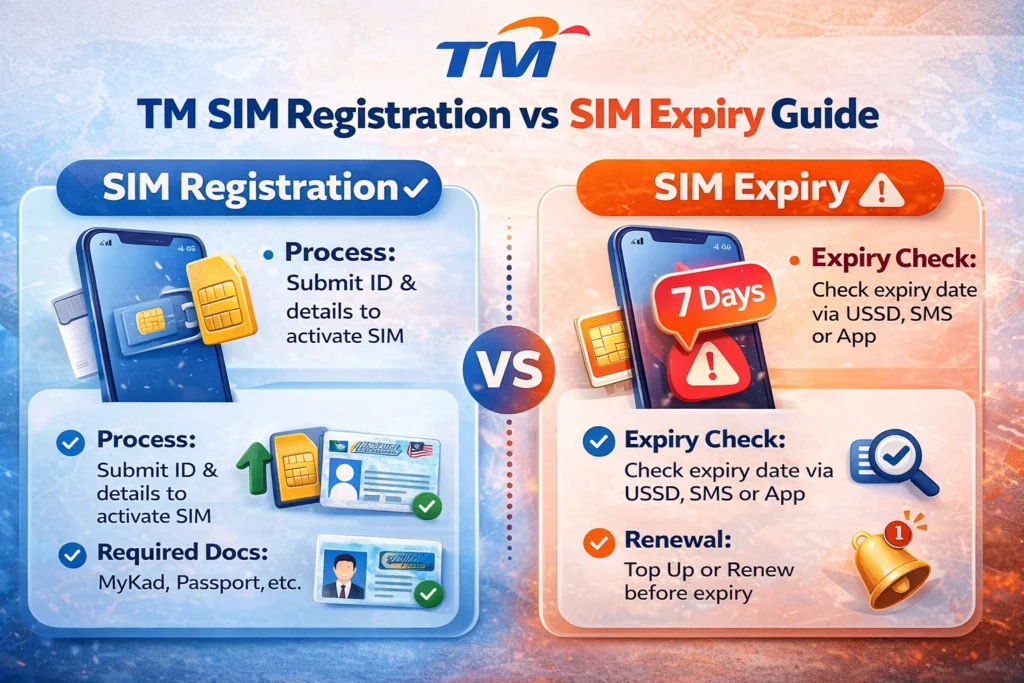
Many TM users think SIM registration and SIM expiry mean the same thing, but they do not. SIM registration is the legal step you must complete so your TM SIM can be activated and used for calls, texts, and mobile data. SIM expiry, on the other hand, happens when a SIM stays inactive for too long. Globe explains both rules separately on its help pages.
The easy way to remember it is this: registration is about approval to use the SIM, while expiry is about losing an active SIM because of inactivity. A TM SIM can be properly registered and still expire later if it is not used for a long time.
Quick Answer
If you buy a new TM SIM, you need to register it through Globe’s official online registration page or the GlobeOne app. Globe says new SIMs can be registered right away, or before the expiry date printed on the SIM packaging if you do not plan to use them immediately.
Once a TM SIM is already active, SIM expiry depends on usage. Globe says a SIM card expires if it is inactive for one year since the last top-up, or if it reaches zero balance and stays inactive for 120 days without any promo or loading activity.
What TM SIM Registration Means
TM SIM registration is required under the SIM Registration Act. Globe says all SIM owners must register their SIMs to use them for mobile internet, calls, and texts, and this applies to physical SIM cards and eSIMs. If a new SIM is not registered, Globe says it will not be activated and cannot be used.
To register, Globe says TM users should use the official online registration page or the GlobeOne app. Registration is also free and zero-rated, so there is no need to pay anyone for it.
What TM SIM Expiry Means
SIM expiry is different. It is not about whether you finished registration. It is about whether the SIM stayed active through normal use. Globe says an active SIM can expire if it is left inactive for one year after the last top-up, or if it has zero balance and stays inactive for 120 days without any loading or promo activity.
Globe also says that once a SIM has expired and been deactivated, it cannot be reactivated. If that happens, the user needs to get a new SIM from Globe’s official channels.You can also read: TM SIM Registration Scam Link Warning 2026
The Main Difference
Here is the simple difference:
A Few Easy Examples
If you bought a new TM SIM today, your first job is registration. Globe says you can register it immediately, or before the expiry date printed on the SIM pack if you want to keep it unused for a while.
If you already registered your TM SIM and used it for months, registration is no longer the issue. What matters now is keeping the SIM active. If you stop loading it and do not use it for too long, Globe says it can still expire.
If your TM SIM expired, registration alone will not bring it back. Globe says expired SIMs cannot be reactivated.
How to Avoid Problems
The safest first step is to register only through Globe’s official channels. Globe says TM users should use the online registration page or the GlobeOne app, and Globe also warns users to follow safe SIM registration practices because fraud methods still target SIM users.
After that, keep your SIM active. Based on Globe’s inactivity rules, the easiest way to avoid expiry is to maintain load, keep using the number, and avoid leaving it with zero balance for long periods.
FAQ’s
Final Words
The best way to understand TM SIM Registration vs SIM Expiry is this: registration is the step that allows a new SIM to start working, while expiry is what can happen later if that SIM is not used enough. They are connected, but they are not the same.
So keep it simple. Register your new TM SIM through Globe’s official page or GlobeOne app, then keep the number active with regular use or load so it does not expire later