TM SIM Registration for New vs Old Phones: A Comparison
If you’re registering your TM SIM, you might wonder whether the process is the same for new phones and old phones. The answer is mostly yes, but there are a few important differences and things to watch out for. I’ll break it down like I’m talking to a friend, clear and easy, with helpful tips so you don’t get stuck.
What’s the Same for Both New and Old Phones
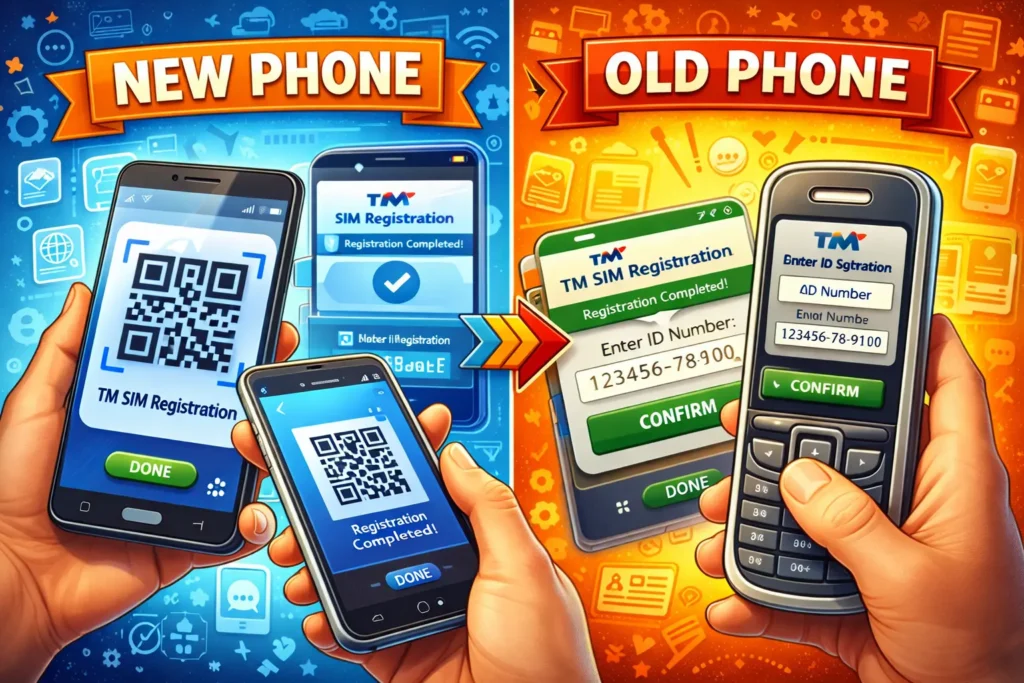
Whether your phone is brand‑new or a few years old, the basic SIM registration steps are the same:
Both new and old phones need these steps because the SIM registration law requires identity verification linked to your mobile number.You can also read:Can Foreign Tourists Register TM SIM Without Address?
Where New and Old Phones Can Be Different
Here’s where things can vary when you register a TM SIM:
1. Network Recognition
Most new phones easily register with the TM network because they support the latest mobile standards and settings.
Some older phones may take a moment to connect properly before the system can send OTP or verify the SIM. You may need to reboot the phone or switch airplane mode on and off to refresh the network connection.
Dual‑SIM Phones
If you have a phone with two SIM slots:
Make sure your TM SIM is in the primary slot when you register online
Some older dual‑SIM phones don’t clearly show which SIM is active for messages, so you might miss the OTP
Newer phones usually show SIM icons right away, so you can easily see which one is receiving messages.
eSIM vs Physical SIM
Newer phones sometimes use eSIMs instead of physical SIM cards.
Even though the medium (eSIM or physical) is different, the registration steps remain generally the same.
Software Compatibility
Older phones may have older apps or older system software, which can sometimes make the GlobeOne app or online forms behave a bit differently.
In those cases, using a computer or another device to do the registration can help.
Receiving OTP
Both new and old phones rely on SMS to receive the OTP, but:
New phones often have fewer message glitches
Some older phones may have a full inbox, blocking new SMS including your OTP
Clearing message space first is a good idea if your phone feels slow or full.
Tips for a Smooth Registration on Any Phone
Whether your phone is new or old, here are easy tips to make registration smooth:
FAQ’s
Final Words
Most of the time, TM SIM registration works the same no matter whether your phone is old or new. The key things are network connection, OTP delivery, and correct details. Older phones may have small quirks like full inbox or SIM slot settings, but with a few easy steps, you’ll get your SIM registered and working. If you want a checklist you can save or print, just let me know!